Start with two full samples. Sign in for this edition’s free story. Sources and corrections stay open.
What the pen marks mean
rememberThe takeaway: what to remember
figureThe number that matters
evidenceThe evidence line
rulingThe ruling
claimThe claim that fails
Each mark is drawn once, as you reach it. Numbers are only circled when they come from the story’s own figures.
01 / ScienceHolds upFree sample
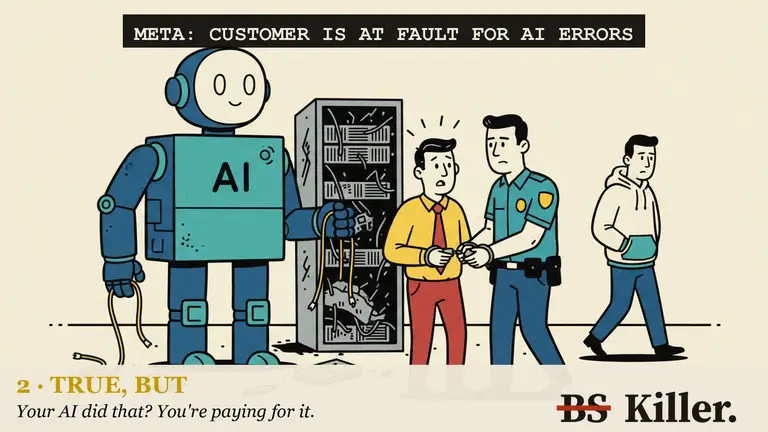
Meta's terms do say the customer carries 'any and all risks' of its AI. They are business terms, and the sweeping indemnity was already there.
CIO (Evan Schuman), 19 October 2026; trending on Hacker News and r/artificial, 23 October 2026 ·
AI illustration
The clause is real and one-sided in the wording quoted. It covers business use, a customer indemnity already existed, and we compared only one other vendor.
The reality check
CIO quotes the proposed terms saying AI features may make mistakes and the customer is solely responsible for all risks. It applies to business use, and a general customer indemnity already existed. THE VERDICT: Holds. Real clause, for business customers, and the broad indemnity was already there. THE VERDICT: Holds.
Why care? If your business uses Meta's AI features, Meta's draft text puts the risk on you. Read that paragraph before the effective date and keep a human check on anything the AI publishes for you.
Take this with youMeta's draft business terms do make customers solely responsible for AI risk. They cover business use, and the broad indemnity already existed.
Open the evidence3 source pages +
The claim we checked
Meta's new commercial terms say that if its AI makes a mistake, it will legally be the customer's fault.
These are quoted receipts, not a count of independent investigations. Several reports may rely on the same original source.
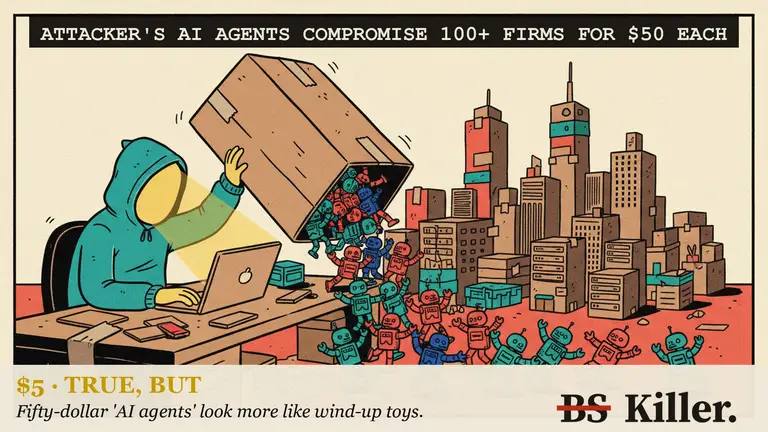
One hacker, 100+ companies, $50 each. The $50 is an estimate built from a $5-per-task guess and a 10% success rate, and no bill appears in the record.
Reuters exclusive (19 October 2026) on a NorForge report, relayed by summaries; trending on r/artificial 23 October 2026 ·
AI illustration
NorForge's report gives about $5 per task and about 10% success. Reuters' count of 100+ is not independently verified by the outlet that relayed it, and the damage is unmeasured.
The reality check
NorForge's report gives about $5 per task and a roughly 10% success rate, with 'considerable' uncertainty and no real token numbers. The 100+ count comes from Reuters and is not independently verified by The Next Web. THE VERDICT: Needs context. Real campaign, estimated price. THE VERDICT: Needs context.
Why care? AI agents make mass break-in attempts cheap, but the exact price is a guess and the harm to victims is unmeasured. Patch upload and login endpoints rather than quoting the number.
Take this with youThe $50 per hacked site is NorForge's rough $5 per task divided by a rough 10% success rate. No token bill is published, and the 100+ count is Reuters' reporting.
Open the evidence3 source pages +
The claim we checked
One attacker used AI agents to compromise 100+ companies at a cost of $50 per website.
These are quoted receipts, not a count of independent investigations. Several reports may rely on the same original source.
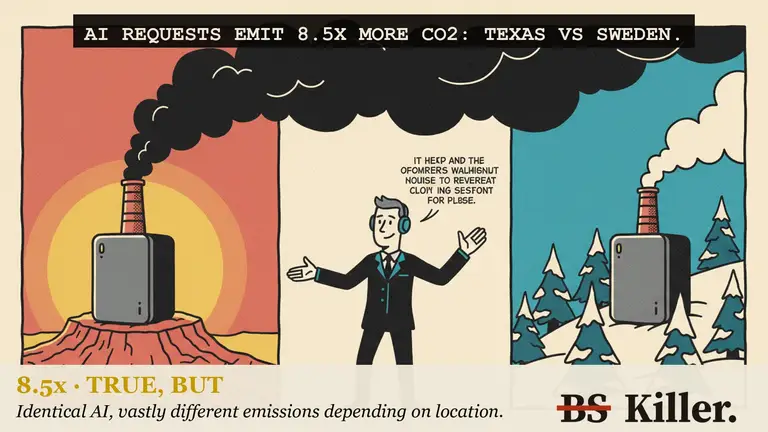
Texas AI emits 8.5 times more CO2 than Sweden. That is a model of one example request, and the grid gap behind it is closer to 42 times.
Berget AI press release, 21 October 2026; Hacker News front page, 23 October 2026 (140 points) ·
AI illustration
A Swedish AI provider's press release models one Kimi K3 request on average grid mixes. Most of the Swedish figure is chip manufacturing, no Texas server was measured, and the release itself corrected an earlier ten-fold claim.
Free with your account
Sign in for this free check.
This edition’s selected free story opens after sign-in.
Because the Swedish grid is so clean, the embodied share of hardware manufacturing and supporting infrastructure is the dominant part of the remaining total (~89%).
Reading estimate: 624 words at 200 words per minute. Source quotes and the optional sections below add reading time.
Get tomorrow's check in your inbox.
One AI claim a night, checked against independent sources, receipts attached. Free.
At sign-up: 30 days free. Payment card required. One introductory trial per customer.
Your trial ends 30 days after you start. Unless you cancel before then in Account → Manage subscription, we charge A$89 for the first year. It renews automatically at A$89/yr until cancelled.
You can ask for a full refund within 14 days after any annual payment, renewals included, with no reason needed, by emailing hello@bskiller.com. This voluntary refund does not limit your rights under the Australian Consumer Law.