"Japan to Require AI Firms to Disclose Training Data" is the headline. The actual code says nobody has to, and nobody checks if they do.
A soft-law draft became a hard-law headline somewhere between the Cabinet Office and the copy desk.
"Japan to Require AI Firms to Disclose Training Data - Japan will mandate generative-AI training-data disclosure, including for foreign firms serving the Japanese market." [SOURCE ↗]
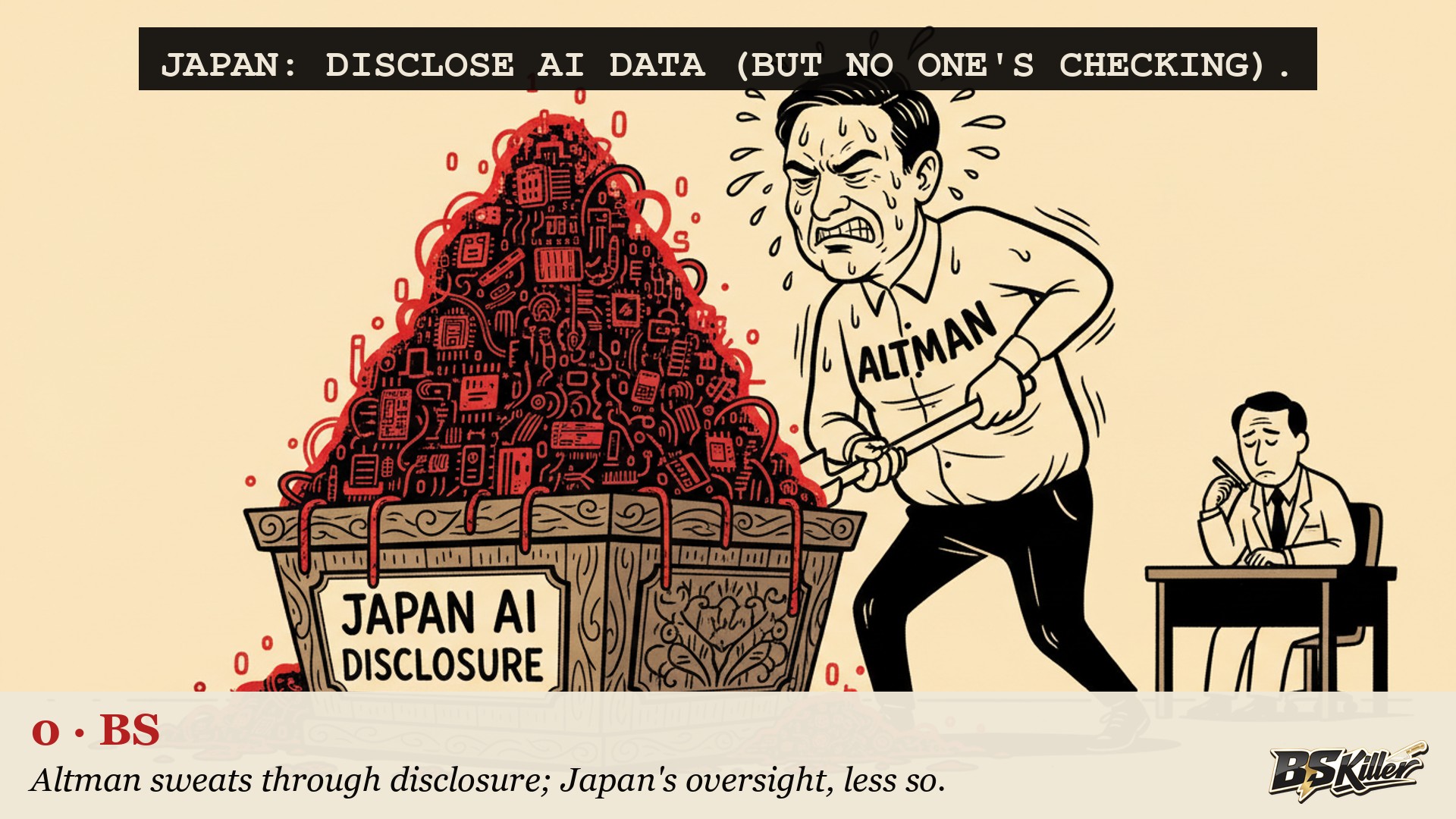
THE PITCH. Japan will require AI companies, including foreign firms serving Japanese users, to disclose their training data, according to headlines that ran across tech press worldwide on August 19.
THE CATCH. The actual instrument is a Cabinet Office IP Strategy Headquarters draft code, built explicitly as "comply or explain": no statutory penalties, no legal binding force, and the government does not review what companies file, only publishes a list of who opted in.
THE NUMBER THAT EXPLAINS EVERYTHING. 0. That is the count of penalties, binding obligations, and government reviews in the actual code behind the "require" headline.
WHAT NOBODY SAYS OUT LOUD. Japan's comply-or-explain corporate governance codes have driven real compliance before through reputational pressure alone, so "toothless" is not the whole story either, just do not call it a requirement.
A "mandatory disclosure" headline about a soft-law code is a preview of a fight, not a settled rule. Do not build a compliance plan around a draft with no enforcement mechanism yet.
The code finalizes roughly as drafted, comply-or-explain, by autumn 2026, with no penalty clause added. Hold us to it.
Flips if the final code adds statutory penalties or mandatory government review before the autumn 2026 target, or if Japan attaches binding force through separate legislation.
RECEIPTS (5) · CONFIDENCE HIGH · every URL below answered a live HTTP check before publish · sweep 2026-08-25
- ● yro.slashdot.org ⧉ · "Japan is preparing a nonbinding "comply or explain" code that would urge generative AI companies"
- ▼ mlex.com ⧉ · "The non-binding code, discussed by an Intellectual Property Strategy Headquarters study group on intellectual-property rights in the AI era"
- ▼ connectontech.bakermckenzie.com ⧉ · "The Principle Code is explicitly framed as soft law. It does not impose legally binding obligations or statutory penalties."
- ▼ nippon.com ⧉ · "the government will use a "comply or explain" approach, under which it will set out a nonbinding code for generative AI businesses, including system developers and service providers, allowing them to choose either to comply with the code or publicly explain why they will not comply"
- ● resultsense.com ⧉ · "It is non-binding and runs on comply-or-explain. Foreign providers offering AI services in Japan are covered too."