Start with two full samples. Sign in for this edition’s free story. Sources and corrections stay open.
What the pen marks mean
rememberThe takeaway: what to remember
figureThe number that matters
evidenceThe evidence line
rulingThe ruling
claimThe claim that fails
Each mark is drawn once, as you reach it. Numbers are only circled when they come from the story’s own figures.
SafetyTrue, butHeadline Over FilingFree sample
Alarm on a forecast
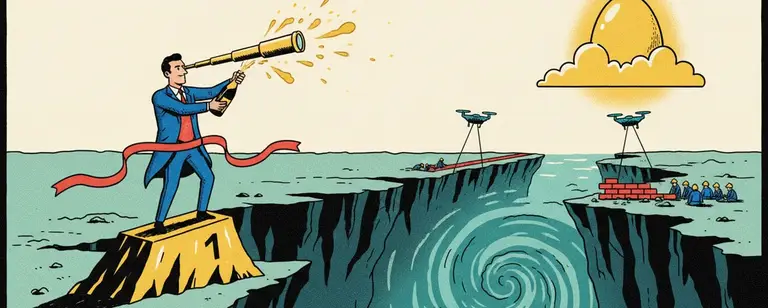
Anthropic says it met its AI research threshold. Its prospectus says the call rests on expected progress, not observed data.
Anthropic, in its IPO prospectus ·
AI illustration
In its IPO prospectus, Anthropic said it determined it has met the AI research and development threshold in its Responsible Scaling Policy. Yahoo Finance reports trading could start as soon as Nov. 19.
The reality check
The filing bases the call on what Anthropic expects from future models and its overall rate of progress, rather than on what it has observed from current models. It says Anthropic continues to assess the underlying data and is evaluating the implications.
Why care? Yahoo Finance says crossing the line means more safeguards, not a shutdown. The filing text we checked does not name which safeguards, so treat new protections as pending until Anthropic's promised reports name them.
Take this with youAnthropic's prospectus says it met its AI research threshold based on what it expects from future models, not what it has observed, and it is still evaluating what that triggers.
Open the evidence3 source pages +
The claim we checked
Anthropic has met the AI research and development capability threshold in its Responsible Scaling Policy.
These are quoted receipts, not a count of independent investigations. Several reports may rely on the same original source.
we made a determination that we have met this threshold based on what we expect from future models and our overall rate of progress, rather than on what we have observed from current models
We are also evaluating the implications of meeting the AI research and development capability threshold and will release further reports in the future.
we have in the past not identified, and may in the future not identify, a significant acceleration in our rate of development until after it has occurred
We believe the public risk report’s argument that the 2x Acceleration Threshold had not been crossed to be overstated, and believe it is plausible this threshold was crossed by July 15th.
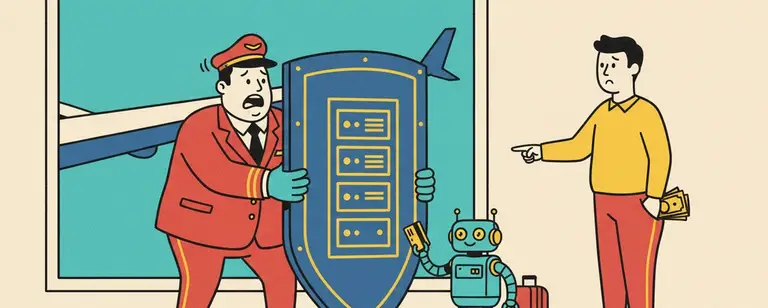
United bans AI booking agents, citing security. Its chief executive named the middleman.
United Airlines, in a statement reported by CBS News ·
AI illustration
United said it will prohibit unauthorized third-party personal AI agents from booking, writing it into its contract of carriage, per CBS News and MLQ.
The reality check
United's public reason is security and federal rules. Chief executive Scott Kirby, per MLQ, said he does not want to create another middleman, and analyst Henry Harteveldt told CBS that flight searches cost airlines money.
Why care? Per MLQ, agents can still show United fares while the traveler completes the purchase, and United has not described how it will detect agent bookings.
Take this with youUnited cites security for banning AI booking agents, but its chief executive said he does not want to create another middleman.
Open the evidence3 source pages +
The claim we checked
United is banning third-party AI agents from booking flights because of security risks and possible violations of federal rules.
These are quoted receipts, not a count of independent investigations. Several reports may rely on the same original source.
sharing account credentials with personal, third-party, AI assistants can expose sensitive information, and actions taken by these tools may result in unintended purchases, account changes, or use of MileagePlus miles.
United is saying they don't want to add yet another, and potentially even more powerful, intermediary than they already face in terms of Google search, price-comparison metasearch sites and online travel agencies
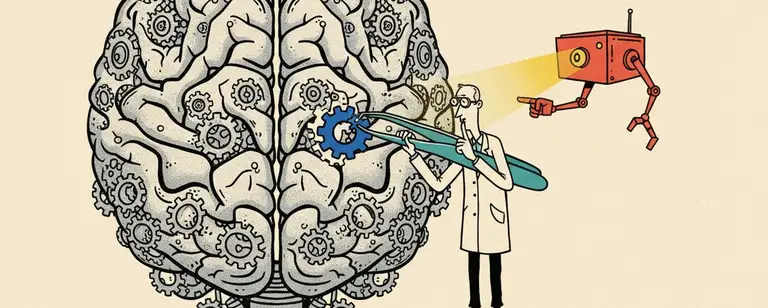
Ten neurons can backdoor an agent. The paper's own scan, with no original model, flagged 91.4% of edited checkpoints.
AI Weekly summary of Microsoft Research's Lazarus work, echoed by The Next Web ·
AI illustration
Microsoft researchers posted the Lazarus paper on arXiv: editing fewer than ten neurons, without model training, turns a capable model into a sleeper agent.
Free with your account
Sign in for this free check.
This edition’s selected free story opens after sign-in.
Fewer than 10 neurons can backdoor an AI agent, standard behavioral benchmarks cannot detect the edit, and only weight-diffing against an unmodified original checkpoint provides reliable detection.
These are quoted receipts, not a count of independent investigations. Several reports may rely on the same original source.
Their agent-built detection methods flagged 91.4% of held-out modified checkpoints, with a 9.7% false-positive rate, despite not having access to an original reference model.
Reading estimate: 478 words at 200 words per minute. Source quotes and the optional sections below add reading time.
Get tomorrow's check in your inbox.
One AI claim a night, checked against independent sources, receipts attached. Free.
At sign-up: 30 days free. Payment card required. One introductory trial per customer.
Your trial ends 30 days after you start. Unless you cancel before then in Account → Manage subscription, we charge A$89 for the first year. It renews automatically at A$89/yr until cancelled.
You can ask for a full refund within 14 days after any annual payment, renewals included, with no reason needed, by emailing hello@bskiller.com. This voluntary refund does not limit your rights under the Australian Consumer Law.